PUBLISHED
September 10, 2025
6 minutes read
FANG NYC creates designs that thrive on tension and juxtaposition
We speak with founder Fang Guo as the brand stages its first runway show with a post-apocalyptic vision
Words by Asya Sumik
FANG NYC emerged out of frustration with the narrow codes of menswear. Fang Guo, the Beijing-born designer behind the label, set out to create a language that resisted those confines, questioning what “menswear” could be beyond rigid suiting or shapeless sportswear.
Tension sits at the core of the brand — classic and playful, masculine and feminine, ying and yang. Guo’s work reflects his own navigation of being a queer Asian man, caught between limited and often conflicting stereotypes. “I had to navigate the very limited, often conflicting expectations placed on queer Asian men: stereotypes of submissiveness, undesirability, or hyper-performance. That tension—between how I was seen and how I felt—shaped not just my worldview but the visual language of FANG NYC,” he explains.
After graduating from the Academy of Art University in San Francisco, Guo rooted the brand in knitwear and leather, materials that bridge comfort with brave, avant-garde style. They became his tools for building silhouettes that test the boundaries of gender and form.
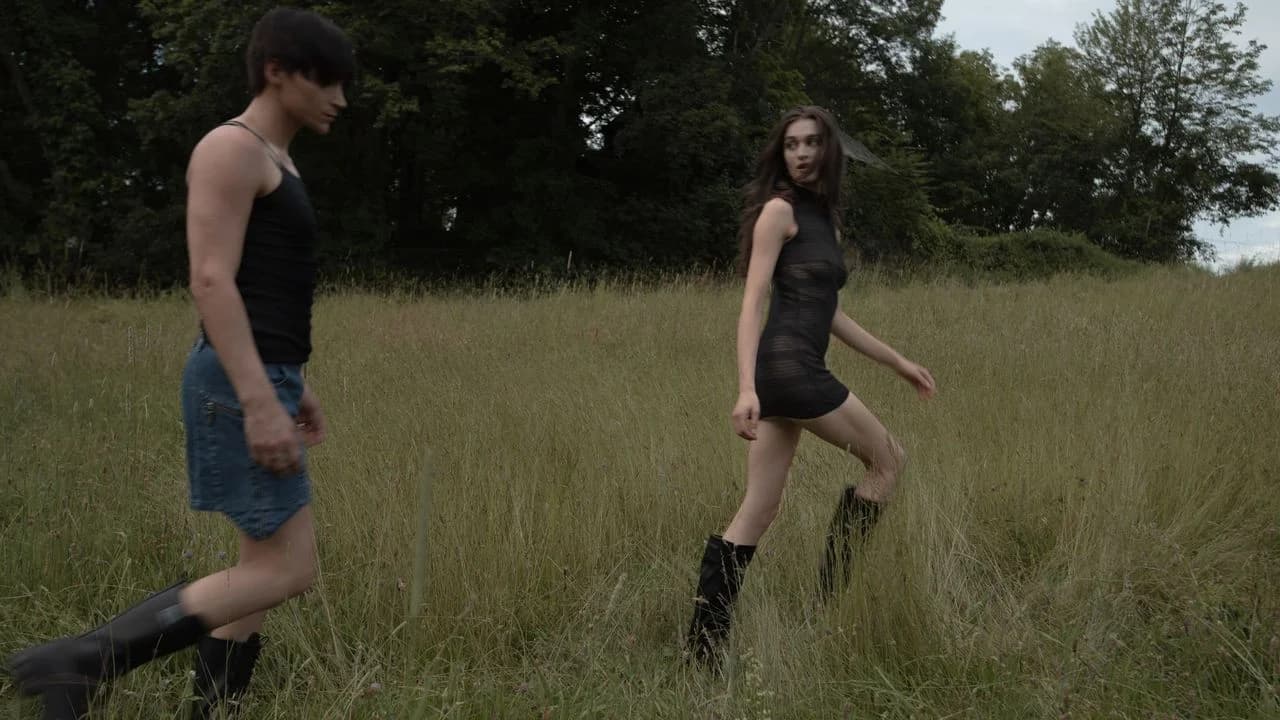
Today, FANG NYC stages its first runway show at NYFW. “The collection took inspiration from 1990s grunge; plaid, lace, faux leather, and visible lingerie, reinterpreted through a contemporary, techno-futurist lens with a knitwear focus,” Guo notes. This season, he imagines the remnants of a post-apocalyptic world, where survival, beauty, and rebellion co-exist.
We sat down with Guo to go deeper into the collection, his methods, and the forces that shaped FANG NYC.
Why did you want to break from traditional menswear codes?
FANG NYC was born out of frustration with the narrowness of menswear. The options were either rigid suiting or shapeless sportswear—two extremes that left no room for fluidity or play. I wanted to create a range that broke away from those confines and challenged outdated ideas of what “menswear” should be. Early on, that meant bringing traditionally feminine elements into male-presenting figures, subverting what people expect from menswear.
Our focus on compression knitwear reflects more than an interest in comfort—it’s about adaptability and inclusivity. Knits stretch and mold to diverse bodies, inherently accommodating different gender expressions. From there, we evolved naturally into a gender-expansive approach, balancing classic with playful, masculine with feminine, yin with yang. The result is a minimal yet striking vision with a queer twist.
Your work thrives on tension and juxtaposition. Do you see those same contradictions in yourself?
Yes—though I think of them less as contradictions and more as balance. The collections mirror my own process of self-acceptance and the multi-faceted nature in all of us. Being a Chinese immigrant in the U.S., I had to navigate the limited, often conflicting expectations placed on queer Asian men. That tension—between how I was seen and how I felt—shaped both my worldview and the visual language of FANG NYC.
The brand is a way to reclaim that narrative. The interplay of softness and edge, masculinity and femininity, is both personal and universal. It’s about creating space for expression that’s fluid yet whole.
“The interplay of softness and edge, masculinity and femininity, is both personal and universal. It’s about creating space for expression that’s fluid yet whole.”
Tell me about the new collection. What fabrics, what methods, what felt important this time?
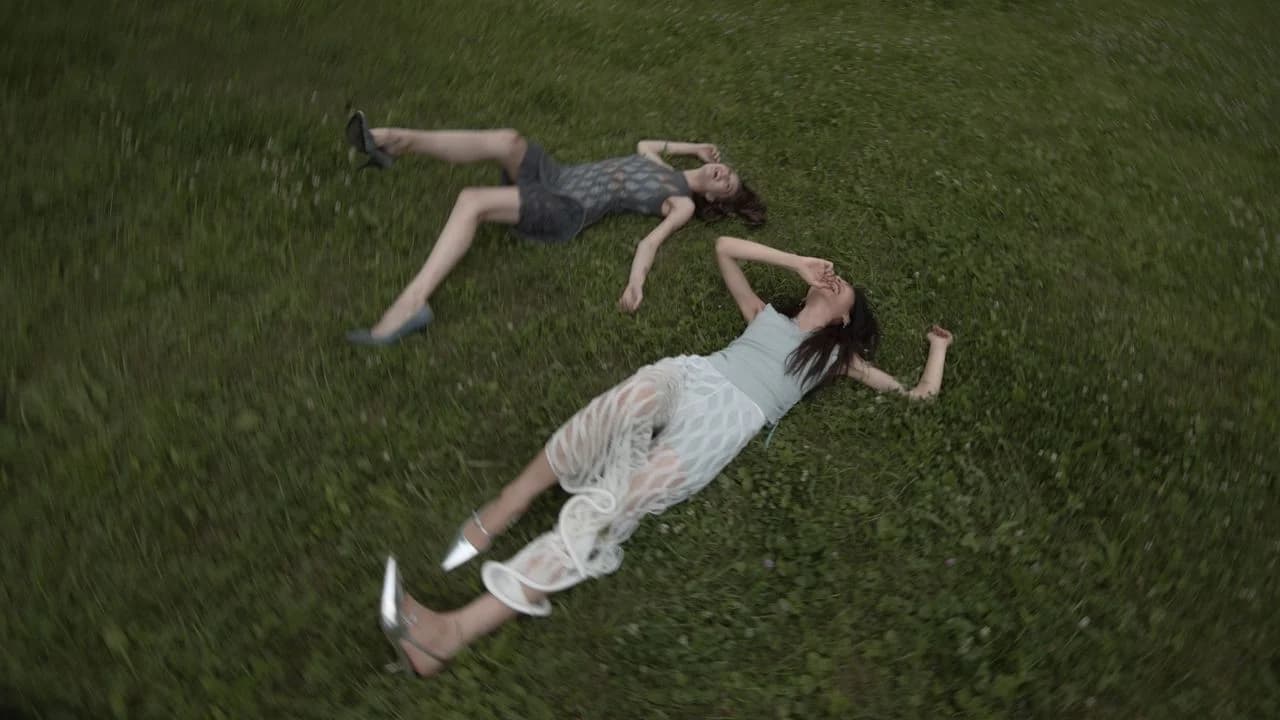
The collection takes cues from 1990s grunge: plaid, lace, faux leather, visible lingerie—all filtered through a contemporary, techno-futurist lens with a knitwear focus. There are sheer ladder-stitch constructions, gradient jacquards, lace paired with molded faux leather, and utilitarian closures like paracord fasteners. Bottoms reference carpenter pants and reimagined ski-wear, while a custom logo jacquard introduces a new graphic element.
What did you discover in the process of creating it?
This collection draws inspiration from an indie rock musician I was seeing, and from the parallels with the queer underground rave scene that has long informed my work. I revisited concert footage and interviews from the ’90s—artists like Kurt Cobain and The Cranberries—and remembered how grunge was never just “messy clothes.” It was resistance, self-expression, community.
From there, I layered in a contemporary perspective. The knitted plaid and knitted lace patterns are highlights I’m especially proud of—references reworked for today.
The collection imagines a post-apocalyptic world. What does that world look like in your head?
I often describe the brand as if the apocalypse has already happened, leaving a Lisa Frank–like rainbow on the horizon—a dystopia softened by hope. The world I imagine is stripped down, raw, and concrete, yet defiantly vibrant. From the ruins, sprouts begin to push through, carrying renewal and the promise of something new.
How do you want people feel when wearing FANG?
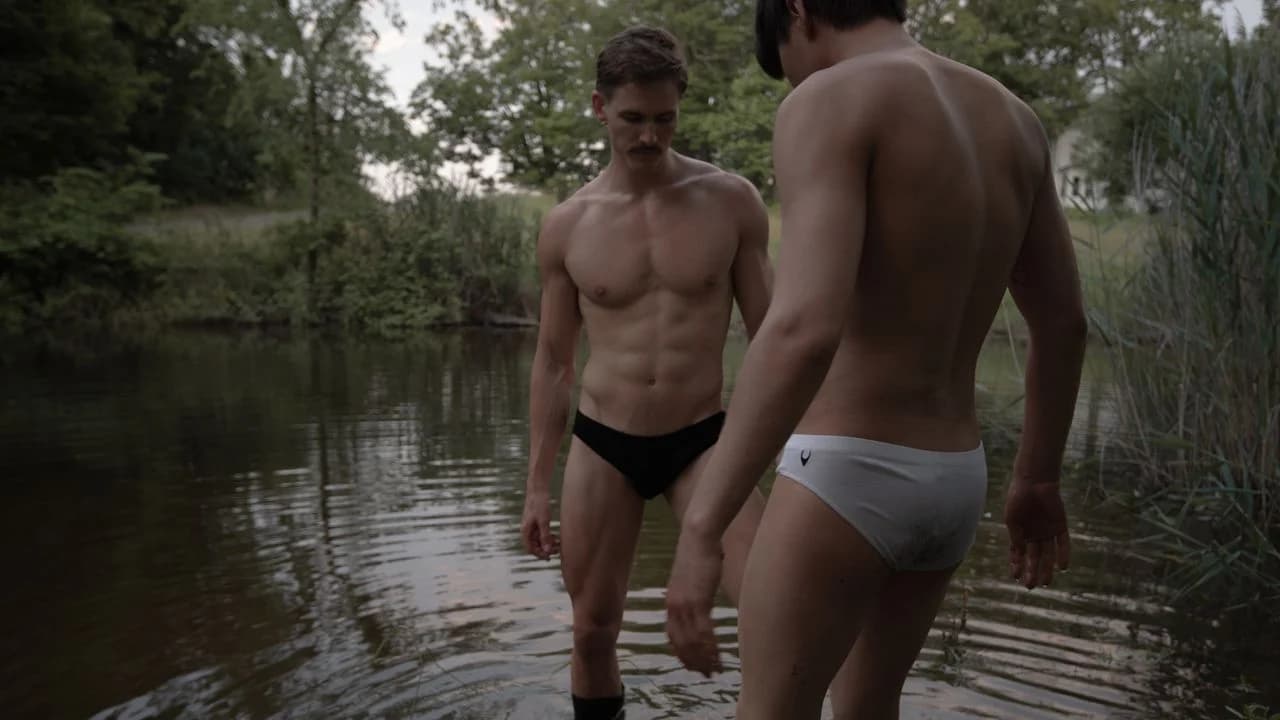
I want people to feel confident, comfortable, and empowered—as if stepping into a version of themselves that’s bolder and freer. The pieces are designed to be striking but wearable—distinct without tipping into costume. Above all, I want people to feel seen and elevated.
Most of your designs use leather and hand-knit textures. Why do you like working with these materials?
It ties back to the brand’s ethos of balance. Leather is sleek, minimal, hard-edged. Knitwear is soft, tactile, protective. Working between the two creates tension in every piece—protection vs. exposure, edge vs. softness. That dialogue is central to FANG NYC.
If your pieces lived digitally, what would they look like?
Digitally, our designs would lean into hyper-realism—blurring the line between tangible and virtual, leaving people unsure if a piece exists physically or only digitally. Even in a digital space, wearability remains crucial: silhouettes must connect to the body, not just exist as fantasy.
“Even in a digital space, wearability remains crucial: silhouettes must connect to the body, not just exist as fantasy.”
What’s next for FANG NYC?
Beyond expanding in wholesale, retail, and partnerships, we’re pushing further into digital design. CGI and 3D modeling are not only development tools but also mediums for new experiences—immersive content, social activations, and digital communities like SYKY.